
- 4 mins
I’ve seen a lot of people on the left ask their MAGA-leaning or ICE-supporting friends to unfollow them on social media. At the end of the day, it’s your account. You can add or block whoever you want. I understand that political beliefs are often a reflection and extension of personal values, so I completely get the sentiment of staying within your circle. For those from marginalized communities, the constant barrage of opposing beliefs can take a real mental and psychological toll and may even increase physical risk. If that’s your experience, I think it’s perfectly reasonable to be selective about who sees your posts on social media.
When it comes to private businesses, you have the freedom to serve whomever you want, as long as you’re not discriminating based on protected classes like gender, race, or ethnicity. So if you want people to unfollow you for not supporting the core beliefs or mission of your brand, and you don’t want your brand used by people you don’t want to associate with, that seems reasonable. We wouldn’t be offended if it happened the other way around — we wouldn’t want our money supporting people whose values don’t align with ours.
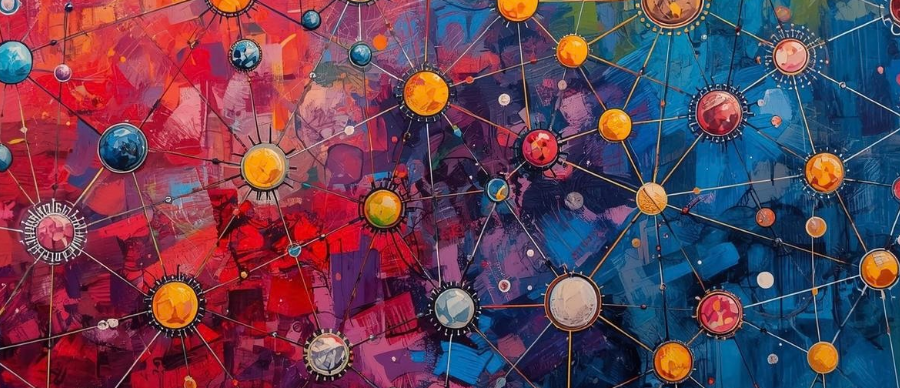
It's not my responsibility
You’ve probably also heard phrases like, “You are not responsible for other people’s ignorance” or “It’s not the oppressed’s job to educate the oppressor,” and that’s true. Unless you have some level of social capital, power, or influence, you shouldn’t be burdened with educating others. People are only a few swipes or clicks away from access to information. And yet, despite being so close to knowledge, we live in an era of epistemological crisis. It’s incredibly easy to fall down rabbit holes, most commonly, the alt-right rabbit hole amplified by social media algorithms.
This got me thinking about echo chambers and how we tend to seek out information we already agree with. If we ask people we disagree with to unfollow us, are we actually doing anyone a favor? In the short term, it might feel good to weed out your opponents. I also agree that we don’t always have to take the moral high ground, as Obama once said, “When they go low, we go high.” We’re long past that era. For instance, if Republican states are gerrymandering, Democratic states need to respond in kind.
That said, I don’t think telling people who disagree with us to unfollow is doing much good. Circling back to my earlier point, if it’s about protecting your mental health, that’s completely understandable. But realistically, if you look at your social circle, it’s probably already fairly selective. Most people, intentionally or not, form echo chambers based on shared interests and common ground. That’s just how social circles naturally develop. Still, most of us have at least a few people in our orbit whom we fundamentally disagree with.
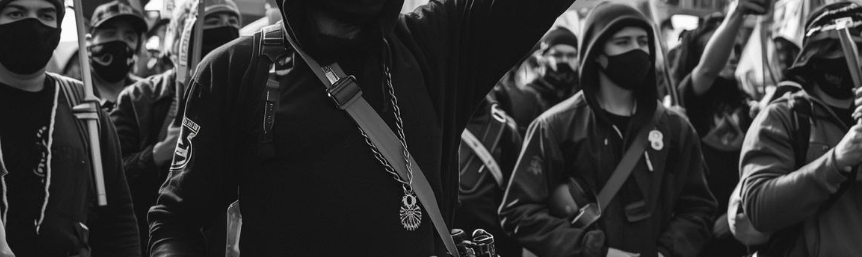
Paradox of Tolerance
Now, some people — those who support ICE overreach or justify recent shootings — may feel like they’re not just people you disagree with, but individuals operating on an entirely different level. Call them whatever you want: fascists, Gestapo, neo-Nazis. And yes, I agree that there are people who, even when confronted with clear video evidence, choose to side with authoritarianism and white supremacy. Just as some marginalized individuals can fall prey to ISIS propaganda and leave their lives in the West to join extremist movements, we’re also seeing radicalization on the right. These are precisely the kinds of people we shouldn’t be leaving alone in an echo chamber.
Whenever you share or repost something political on social media, you’re usually preaching to people who already agree with you. I understand that there are also moderates following along, and that social media activism can be one way to push them further in your direction. That’s fine; most people who engage with my content already tend to agree with me as well. Still, if we’re able to, we should try to keep some form of connection with those on the other side.
I’m not saying you need to strike up conversations with them. You don’t have to engage directly, reach out, or debate them. It’s great if you do, but that’s not what I’m asking. At the very least, staying connected allows them to see what you share or repost. They probably won’t change their beliefs overnight because of your posts, but through mere exposure effect, they may become more open to reconsidering their views.
Echo Chamber Trap
With the recent killing of Alex Pretti, the videos and circumstances point to an unjustifiable and indefensible act. Understandably, some right-leaning influencers are struggling to respond and many are staying quiet. But those who continue parroting the Trump administration’s talking points about the shooting being justified genuinely believe Pretti had it coming. The last thing we should do is further box these people into an even tighter echo chamber.
If you’re in a privileged position to reach a diverse audience, you should try to keep it that way. I’m not trying to be an enlightened centrist or someone who is secretly conservative and insists that both sides have equally good points. None of that enlightened-centrist BS. This is about being pragmatic. In a world where social media can shape our entire worldview, we need to treat it as both a tool and a weapon.
Perhaps I’m being overly optimistic in believing that truth ultimately prevails. Maybe it doesn’t even matter, because as much as people like to claim we live in a “marketplace of ideas,” that idea collapses once social media algorithms decide the next ten posts we see based on countless hidden factors. No matter how much nuance you bring to a conversation, there will always be people who accuse you of supporting fraud simply because you criticize a YouTube “journalist” who claims to uncover it.
Maybe we’ve already passed the tipping point, where exposure to opposing views no longer leads to doubt, questioning, or genuine inquiry. I’m not ready to accept that yet.